

Planning to study abroad? Start with the country, not the university. For each of 35 countries we have gathered what you would otherwise look for on a dozen different websites: what the universities are like, how admission works, what studying and living cost, where to look for scholarships and whether you can work while you study. With links to official sources.
What you will find for each country
Choose a country
New articles every week about EU-funded research projects, written for students. Every article ends with a short quiz – check what you remember.

Insulated walls and new windows sound like good news for anyone renting a room. But across Europe, energy renovations can also push rents up and leave the most vulnerable behind. The EU-funded PREFIGURE project is studying local initiatives that manage to make homes energy-efficient, affordable and inclusive at the same time – and at the end you can check how energy-smart your own way of living is.

Dyeing fabric is one of the most environmentally damaging steps in making clothes: it uses huge amounts of water, and a lot of the dye never binds to the textile and stays in the water. A team led by Filipe Natalio at the NOVA University of Lisbon is taking a completely different route and wants cotton to take on its colour while the plant is still growing. The HYDROCOLTON project combines chemistry, plant biology and hydroponics – and at the end you can check how eco-friendly your wardrobe is.
Fibre-optic cables already lie on the seabed along almost every coastline – and they could soon start watching over people on land. A team from the University of Alcalá, working in the SAFE project, has shown that a single fibre can be turned into a network of thousands of sensors that pick up an approaching tsunami, at a fraction of the cost of buoys or seabed seismometers. It is a story about physics, the sea and doing the maths on costs – and at the end you can check whether you think like an early warning system designer.

A semester abroad, a traineeship after graduation or a free train pass at 18 – here is what Erasmus+ offers and how to apply.

ID card or passport, the new EES border checks, passenger rights, free roaming, the euro and the EHIC card – ten short guides for your next trip.
Each list shows kilometres of slopes, the number of lifts and the altitude; the resort page breaks the slopes down by difficulty and the lifts by type. Data from the skiresort.info catalogue and the resorts’ websites – as of 22 October 2026.
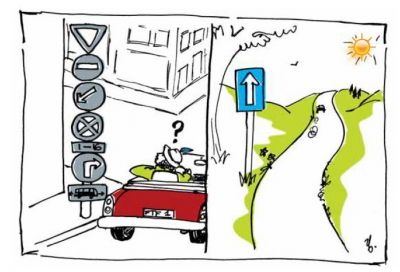
Road trip, Erasmus or a summer job abroad? Before you set off: these rules change from country to country.
Driving abroad? Check where you need a vignette, where you pay at toll booths and where the motorway is free – click a country for the details.

Where to look, your rights without a work permit, CV and interview, recognition of diplomas, contract and insurance, internships – and how to spot a job scam.
Where is it easiest to find a job, how much is the minimum wage and what do you do in your first weeks? Key figures and practical tips for every EU country, Iceland, Liechtenstein, Norway, Switzerland and the UK.


 EN
EN 
 CS
CS DE
DE ES
ES FR
FR HU
HU IT
IT PL
PL PT
PT РУ
РУ SK
SK TR
TR УК
УК AR
AR 中文
中文 Universities in Europe
 Bachelor
 Master
 Integrated Master's
 Doctorate
 MBA
MBA How you can learn languages?
 Tastes of Europe :)